Why Cinema Lobbies Put the Pause Before the Picture
Why cinema lobbies put the pause before the picture: see how thresholds, gathering space and visual cues ease the shift from street pace to focused viewing.
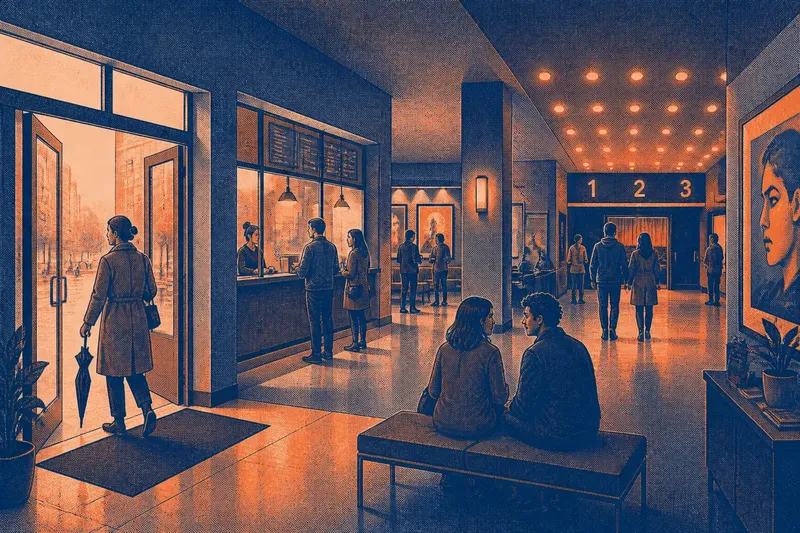
A cinema lobby gives your attention somewhere to land before the film begins. Its doors, open floor, signs and waiting areas create a gradual shift from the street’s competing demands to the dark, concentrated space of the auditorium.
That pause is not simply dead time. It helps people arrive, orient themselves and gather without carrying every outside distraction straight into the screening. The design works through a sequence of small cues rather than a single dramatic gesture.
1. The entrance marks a threshold
Crossing into a cinema should feel different from stepping into an ordinary shop or corridor. A change in lighting, ceiling height, flooring or sound tells the body that the street has been left behind. Even a modest vestibule can create that distinction by adding a moment between the pavement and the main lobby.
That in-between space also gives practical tasks a place to happen. A visitor can close an umbrella, check a ticket or wait for a companion without blocking the route to the screens. When the entrance opens directly onto a busy queue, people have less room to adjust and the transition feels abrupt.
The threshold does not need ornate decoration. A clear change in material or light can be enough, provided it is legible and does not obscure access. The aim is to signal arrival, not to make the doorway an obstacle or a spectacle.
2. Gathering space slows the rush
Once inside, visitors need room to pause without standing in the way of everyone else. A well-arranged lobby distinguishes routes for moving through from places for waiting. Benches, ledges or a broad clear area can support different kinds of arrival: someone may be meeting friends, checking a booking or simply waiting for the doors to open.
This separation matters because cinema audiences seldom arrive as one orderly group. Some people come early, others hurry in close to the screening, and companions may need to find one another. A lobby that offers a visible meeting point reduces aimless wandering while keeping queues and circulation easier to read.
Imagine a small independent cinema where visitors often gather beside the ticket desk. If it shifts a bench to a quiet wall and leaves the route to the auditorium clear, arriving friends have an obvious place to meet while people heading to their seats can pass. The expected result is a calmer flow, not a change to the film or the audience itself.
Not every square metre needs a display or a promotional stand. Filling every open patch may create visual noise and make the lobby feel like a corridor of competing demands. A little unassigned space can be more useful than another sign or branded object.
3. Visual cues prepare attention
Light and sightlines can guide visitors towards the next part of the visit without turning the lobby into a maze. A brighter ticket point, a view of the auditorium doors or a change in colour near the screening rooms can make the route apparent at a glance. The strongest cue is often the one that helps people decide where to go without requiring them to stop and study a map.
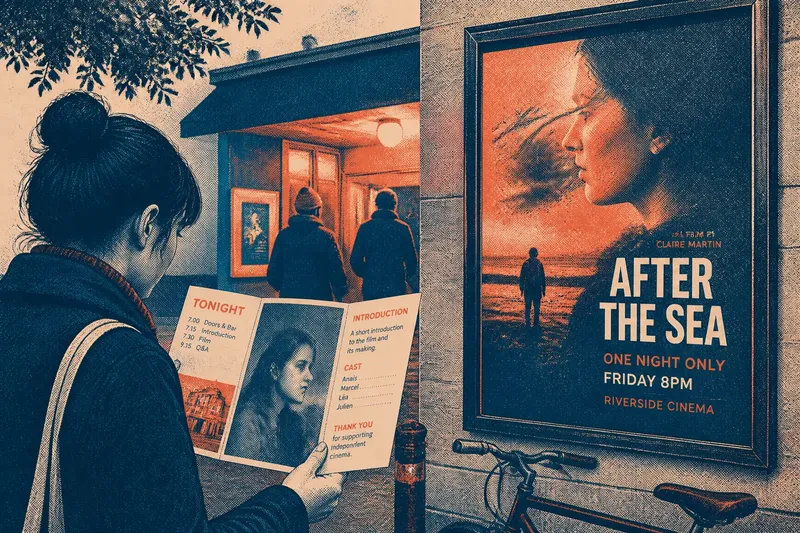
Displays have a different job: they offer something to look at while people wait. A poster, a changing screen or a small exhibition can bring film culture into the lobby, but its placement matters. If it sits across a queue or beside an essential direction sign, the invitation to linger conflicts with the need to move.
Scale and contrast help establish priority. A screening-room number should be easier to spot than decorative copy, and a route sign should not disappear into a busy promotional wall. The lobby can still feel expressive; it simply needs to distinguish between information that directs and imagery that invites a closer look.
4. Sound and light set a pace
The shift towards viewing is not only visual. Street noise, conversation, music from a café and sounds from the auditorium can overlap in the lobby. Surfaces and spatial divisions affect how sharply those layers compete, while doors and curtains can soften the change between shared public space and the screening room.
Lighting also shapes how long people feel comfortable lingering. A lobby that is uniformly bright may make the auditorium entrance feel like a sudden plunge; one that is too dim can make ticket details and routes harder to read. A gradual change lets visitors see where they are going while hinting that the screening space asks for a different kind of attention.
These choices should serve the cinema’s actual pattern of use. A busy foyer may need stronger directional lighting and clear speech-friendly areas; a compact venue may rely on a simple contrast between the lobby and the auditorium. The useful question is not whether a space feels luxurious, but whether people can wait, talk and find their screen without fighting the environment.
5. The auditorium door completes the shift
The lobby’s transition has a destination: the moment a visitor enters the auditorium and chooses a seat. Doors, curtains or a short passage can mark that change, while a view into the room may help late arrivals judge where to go. The boundary should feel clear without making entry confusing or inaccessible.
Timing contributes too. If the auditorium is open, the visible screen and rows of seats can draw attention forward. If it remains closed, the lobby must support waiting through its seating, signs and meeting places. Either arrangement can work when the next action is understandable and people are not left guessing whether they should queue, wait or enter.
The pause does not require silence or solemn behaviour. Visitors may talk, buy a drink or look at a display. The point is that the space gives those activities a place before the film asks for sustained attention, rather than treating every moment before the opening image as an inconvenience.
Questions about lobby design?
Why have a lobby instead of a direct entrance?
A lobby provides space to orient, gather and wait before visitors enter the auditorium. A direct entrance can still work, but it gives less room for that transition and may place queues or conversations close to the screening.
What makes a cinema lobby feel welcoming?
Clear routes, usable waiting space and signs that are easy to spot help visitors feel confident about where to go. Welcoming design does not depend on elaborate decoration; it depends on making arrival and waiting comfortable without obstructing movement.
Should cinema displays encourage people to linger?
They can, as long as the display does not block circulation or compete with essential directions. Put browsing material where people can pause safely, and keep ticket, screen and accessibility information visually clear.
How can a small cinema create a sense of transition?
It can use a distinct entrance threshold, a clear meeting point and a noticeable change in light or material near the auditorium. These cues can define a sequence even when there is little room for a large foyer.
Design for the arrival
To understand why cinema lobbies put the pause before the picture, look at what happens between the door and the seat. Can a visitor tell where to meet, where to wait and which way leads to the screen? Do displays invite attention without obstructing a route? Those practical observations reveal whether the lobby is doing more than holding people until the film starts.
A good lobby does not dictate how an audience should behave. It gives people enough room and clear enough cues to make the shift in their own way. That is its quiet contribution to moviegoing: the film can begin in the auditorium because the space outside has already helped the audience arrive.